Pitru Paksha Shradh Puja
Choose Your Package
For Booking Service,Advance Payment Will Be Required
100 % Safe & Trusted
SECURE SSL ENCRYPTED PAYMENT
Pitru Paksha Shradh Puja
About Pitru Paksha Shradh Puja
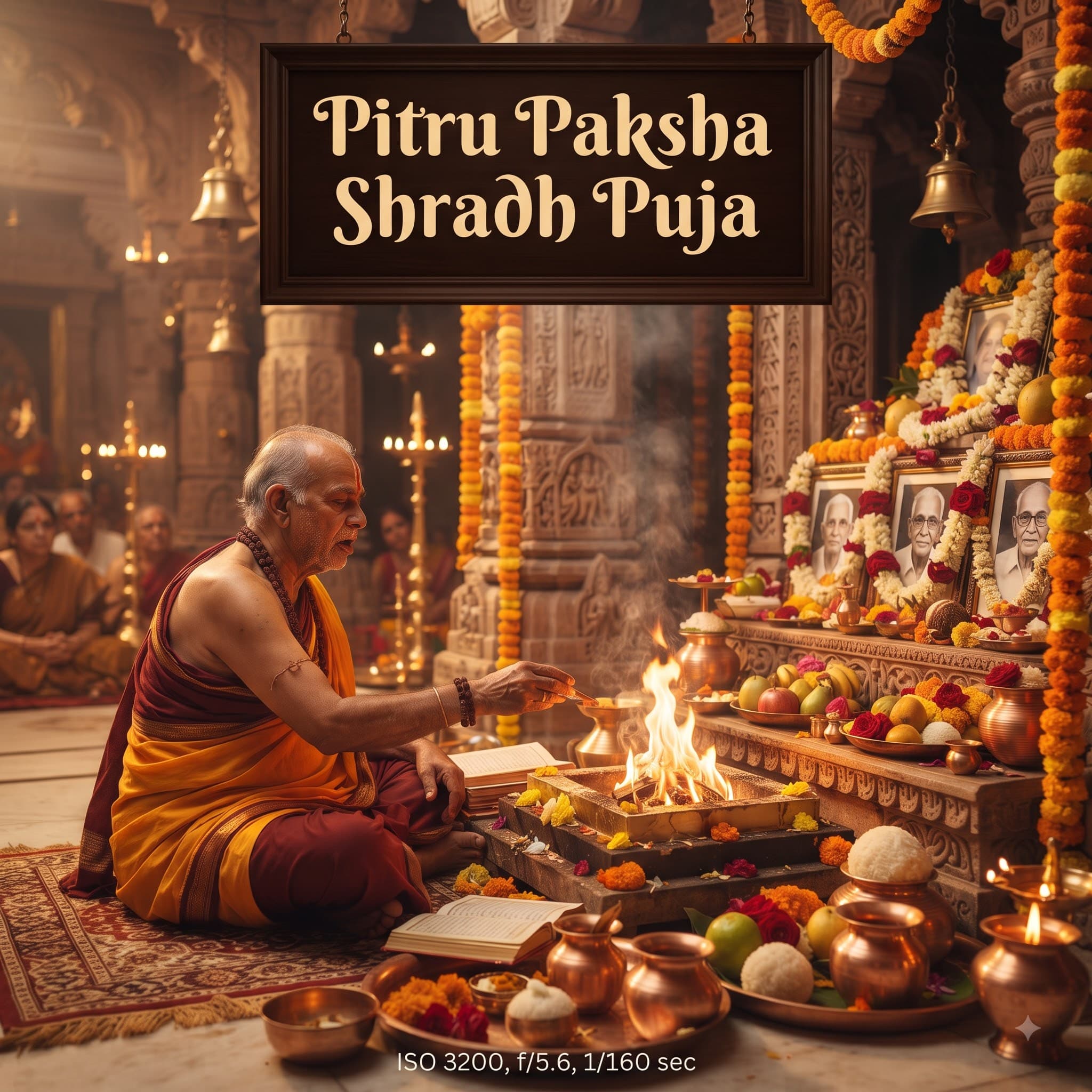
Pitru Paksha (Mahalaya) Shradh Puja is a sacred Hindu ritual performed during the Pitru Paksha fortnight to express gratitude, respect, and remembrance for departed ancestors (Pitrs). It is one of the most important ancestral observances in Sanatan Dharma. According to Hindu tradition, offerings made during Pitru Paksha are dedicated to one's forefathers with prayers for their peace and divine blessings upon the family. The ritual symbolizes gratitude towards previous generations and the continuation of family values and traditions. The ceremony generally includes Sankalp, Ganesh Puja, Vishnu Puja, Pitru Tarpan, Pind Daan (where applicable), Brahmin Bhojan (if arranged), Dakshina, and prayers for the departed souls. While Shradh is traditionally performed on the specific Tithi (lunar day) of the departed ancestor, if the exact Tithi is unknown or cannot be observed, Sarva Pitru Amavasya (Mahalaya Amavasya) is considered an auspicious day to offer prayers to all ancestors. The puja can be performed at home, on the banks of a sacred river, at a temple, or at a designated place for Shradh rituals under the guidance of an experienced Vedic Pandit.
Honor the memory of your ancestors through Pitru Paksha (Mahalaya) Shradh Puja and seek their blessings for peace, family harmony, prosperity, and the well-being of future generations.
- •
Offers respect and gratitude to departed ancestors
- •
Seeks divine peace for the departed souls
- •
Invokes ancestral blessings for the family
- •
Promotes family unity and preservation of traditions
- •
Encourages remembrance, gratitude, and spiritual responsibility
- •
Brings peace of mind through the fulfillment of family duties
- •
Strengthens the bond between generations through sacred traditions
- •
Preserves one of the most significant annual Vedic observances
The puja area is cleaned and sanctified
Sankalp is taken in the name of the departed ancestors
Lord Ganesha is worshipped
Lord Vishnu is invoked as the protector of the ritual
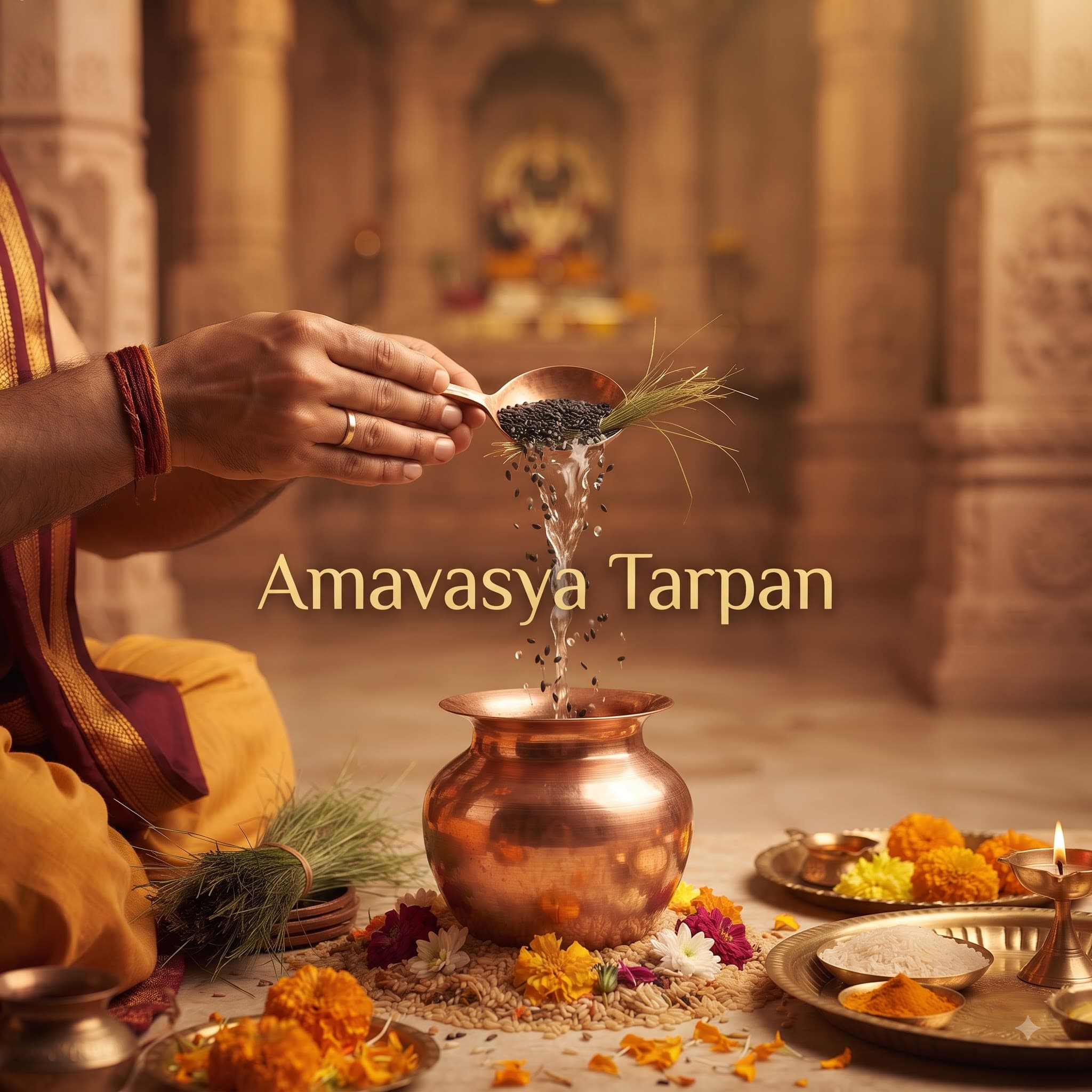
Pitru Tarpan is performed with water, sesame seeds, and sacred mantras
Pind Daan is offered (where applicable and according to family tradition)
Special Shradh mantras are recited
Brahmin Bhojan and Dakshina are offered (if arranged)
Prayers for peace and blessings are offered
Aarti is performed
Prasad is distributed
The ceremony concludes with blessings from the Pandit
- Samagri: Included
- Home Service: Yes
- Temple Service: Yes
- Online Service: No
When should Shradh be performed?
Ideally, Shradh is performed on the Tithi (lunar day) of the departed ancestor during Pitru Paksha. If this is not possible or the Tithi is unknown, Sarva Pitru Amavasya (Mahalaya) is commonly observed.
Can Shradh be performed at home?
Yes. Shradh can be performed at home, at temples, or at other appropriate locations under the guidance of an experienced Pandit.
Is Pind Daan compulsory?
No. The necessity of Pind Daan depends on family traditions, regional customs, and the guidance of the officiating Pandit.
Can women participate in the ceremony?
Yes. Women can participate in prayers and rituals according to their family traditions and the guidance of the Pandit. Practices may vary across different communities.