Navratri Kalash/Ghat Sthapana Puja
Choose Your Package
For Booking Service,Advance Payment Will Be Required
100 % Safe & Trusted
SECURE SSL ENCRYPTED PAYMENT
Navratri Kalash/Ghat Sthapana Puja
About Navratri Kalash/Ghat Sthapana Puja
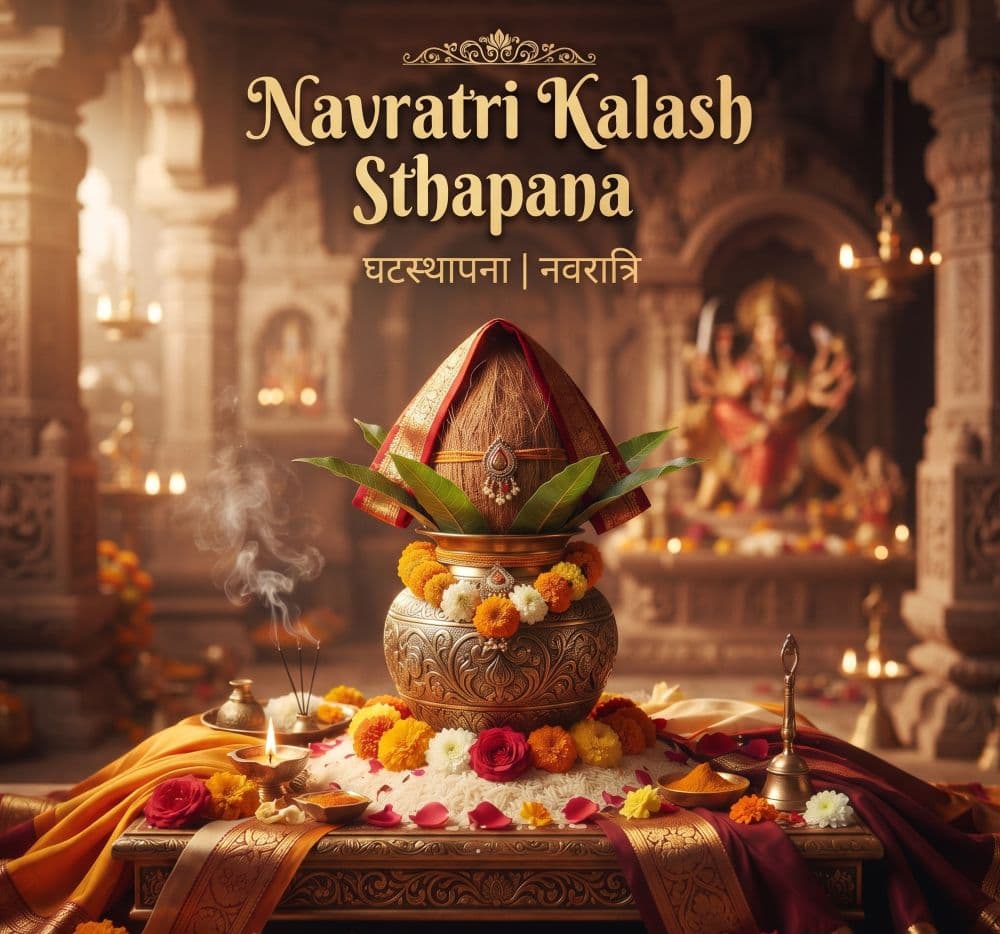
Navratri Kalash Sthapana Puja, also known as Ghatasthapana, marks the auspicious beginning of the nine-day festival of Sharadiya or Chaitra Navratri. It is one of the most important rituals of Navratri and symbolizes the invocation of Goddess Durga in her divine forms. During this sacred ceremony, a Kalash (sacred pot) is established with Vedic rituals and placed near the idol or picture of Goddess Durga. The Kalash represents divine energy, abundance, purity, and the presence of the Goddess throughout the Navratri celebrations. Many families also sow barley (Jowar/Jau) in a clay pot during the Kalash Sthapana. The growth of the barley over the nine days symbolizes prosperity, growth, and auspicious beginnings. The puja includes the worship of Lord Ganesha, Kalash, Maa Durga, and the invocation of the nine forms of Goddess Durga (Navadurga). Devotees begin their Navratri fasting, daily prayers, Durga Saptashati recitation, and evening Aarti after the Kalash has been established. The ceremony is performed at homes, temples, offices, community halls, and cultural organizations. The rituals may vary slightly according to regional traditions, and our Pandits conduct the puja in accordance with your family's customs.
Begin the sacred festival of Navratri with a traditional Kalash Sthapana Puja, invoking the blessings of Maa Durga for health, prosperity, protection, strength, and spiritual growth.
- •
Invokes the divine presence of Maa Durga during Navratri
- •
Seeks blessings for health, prosperity, and family well-being
- •
Brings positivity, peace, and spiritual energy into the home
- •
Marks an auspicious beginning to the nine-day festival
- •
Encourages devotion, discipline, and daily spiritual practice
- •
Strengthens family unity through collective worship
- •
Invokes courage, wisdom, and inner strength
- •
Preserves the sacred traditions of Navratri
The puja area is cleaned and decorated
A clean Chowki is prepared with a red cloth
Lord Ganesha is worshipped for an auspicious beginning
Sankalp is taken in the names of the devotees
Barley (Jau) is sown in a clay pot (where traditionally followed)
Kalash is filled with water and decorated with mango leaves and a coconut
Kalash Sthapana (Ghatasthapana) is performed with Vedic mantras
Maa Durga is invoked and worshipped
Flowers, fruits, sweets, and Naivedya are offered
Durga Stotra or selected chapters of Durga Saptashati are recited
Aarti is performed
The Pandit explains the daily worship procedure to be followed during the nine days of Navratri
- Samagri: Included
- Home Service: Yes
- Temple Service: Yes
- Online Service: No
Why is Kalash Sthapana important?
Kalash Sthapana marks the formal beginning of Navratri and symbolizes the invocation of Maa Durga's divine presence in the home or place of worship.
Is barley sowing compulsory?
Barley (Jau) sowing is a traditional practice followed in many regions, but customs vary. Our Pandit will conduct the ceremony according to your family's tradition.
Can this puja be performed at home?
Yes. It is commonly performed in homes, apartments, offices, temples, and community venues.
Is Havan compulsory?
No. Havan is optional and can be selected as an add-on or included in the Premium package.