
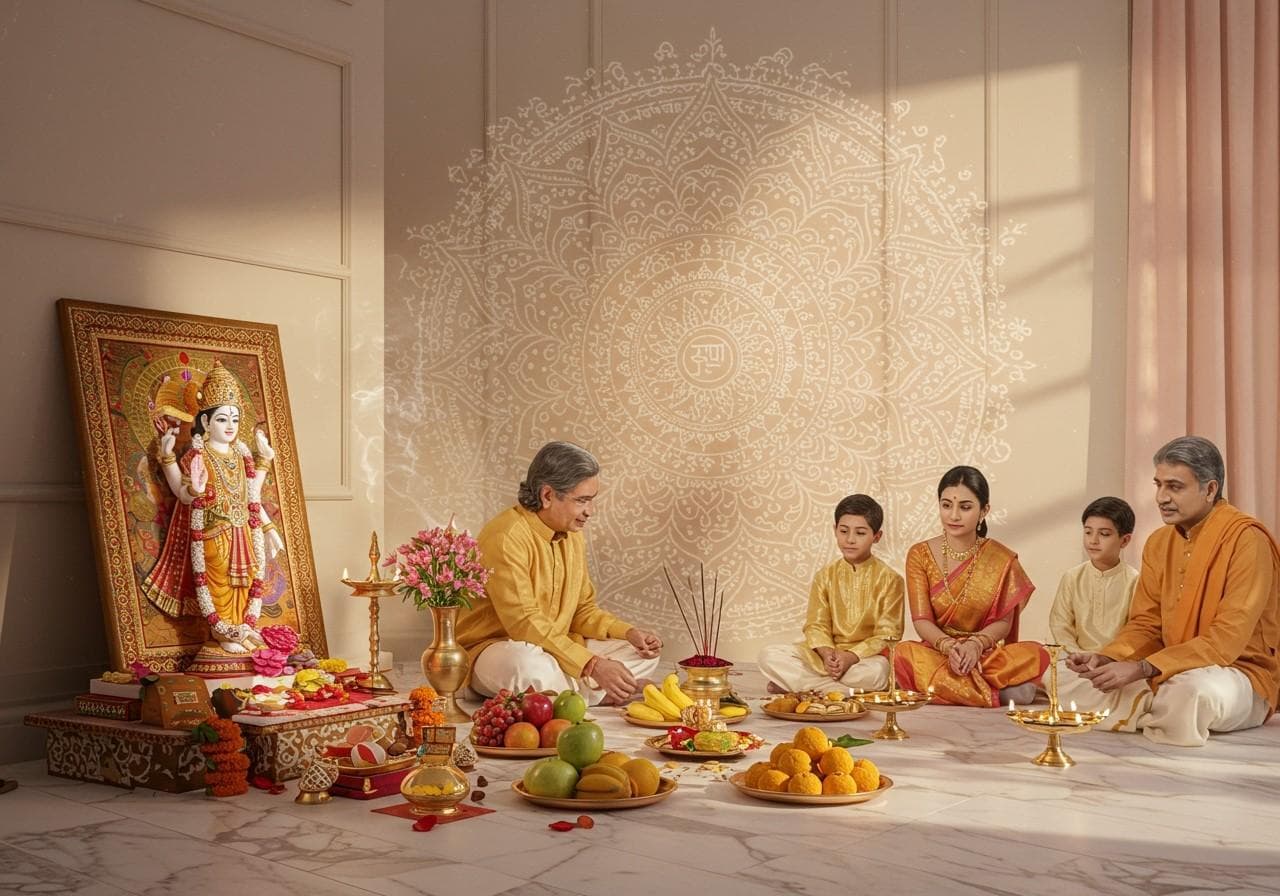
Featured Snippet
Satyanarayan Puja is a sacred Hindu ritual dedicated to Lord Vishnu, performed to seek blessings for prosperity, happiness, success, and family well-being. It is commonly conducted during housewarming ceremonies, weddings, birthdays, business inaugurations, festivals, and other auspicious occasions under the guidance of an experienced Pandit.
Table of Contents
1. Introduction
2. What is Satyanarayan Puja?
3. The Story Behind Satyanarayan Katha
4. Spiritual Significance
5. Benefits of Performing Satyanarayan Puja
6. Best Occasions to Perform the Puja
7. Who Can Perform Satyanarayan Puja?
8. Why Book Through BookMyPanditjee?
9. FAQs
10. Conclusion
Introduction
Among
the many Hindu rituals performed across India,
Satyanarayan
Puja
holds a
special
place because of its simplicity, spiritual significance, and
universal appeal.
Dedicated
to
Lord
Vishnu
,
the preserver in the Hindu Trinity, this puja is performed by
millions
of families to express gratitude, seek divine blessings, and pray for
prosperity,
peace,
and happiness.
Unlike
rituals performed only on specific festivals, Satyanarayan Puja can
be organized
for a
variety of occasions. Families often perform it after purchasing a
new home,
starting
a new business, celebrating birthdays or anniversaries, welcoming a
newborn,
achieving
an important milestone, or simply as an expression of devotion. It is
also
common
to perform this puja after fulfilling a heartfelt wish as a gesture
of gratitude.
The
ritual is centred around the
Satyanarayan
Katha
,
a traditional narration that
highlights
the importance of truth, devotion, humility, and faith. According to
tradition,
sincere
participation in the puja and attentive listening to the Katha
inspire devotees to
live a
life guided by honesty, compassion, and gratitude.
In
today's fast-paced world, many families find it difficult to locate
an experienced Pandit
or
organize the ceremony efficiently. Digital platforms have simplified
this process by
making
it possible to connect with verified Pandits, schedule ceremonies,
and receive
guidance
from the comfort of home.
This
guide explains everything you need to know about Satyanarayan
Puja—from its
significance
and benefits to preparation, rituals, and how to arrange the ceremony
with
confidence.
What is Satyanarayan Puja?
Satyanarayan Puja is a traditional Hindu ceremony dedicated to Lord Satyanarayan , a revered form of Lord Vishnu. The name combines two Sanskrit words:
• Satya – Truth
• Narayana – Lord Vishnu
Together, the name signifies devotion to truth and righteousness, values that are central to the teachings associated with Lord Vishnu. The ceremony typically includes:
• Invocation of Lord Ganesha
• Kalash Sthapana (installation of the sacred pot)
• Worship of Lord Vishnu
• Chanting of Vedic mantras
• Reading or listening to the Satyanarayan Katha
• Offering fruits, sweets, Panchamrit, and Tulsi leaves
• Aarti
• Distribution of Prasad
Although rituals may vary slightly across regions, the essence of the puja remains the same expressing gratitude, strengthening devotion, and praying for peace and prosperity.
The Story Behind Satyanarayan Katha
One of the most important aspects of the puja is the Satyanarayan Katha , a sacred narration traditionally recited during the ceremony. The Katha illustrates how people from different walks of life receive Lord Vishnu's blessings through faith, sincerity, and truthful conduct. The stories emphasize values such as:
• Honesty
• Humility
• Compassion
• Charity
• Gratitude
• Keeping one's promises
• Devotion to God
The recurring message is that sincere devotion, combined with righteous actions and integrity, leads to spiritual fulfillment and inner peace. Listening to the Katha is considered an integral part of the ceremony, encouraging devotees to reflect on these timeless principles and apply them in everyday life.
Spiritual Significance of Satyanarayan Puja
The
significance of Satyanarayan Puja extends beyond material prosperity.
It is a
reminder
to cultivate truthfulness, gratitude, and faith in daily life.
Many families perform this puja:
• To thank God for blessings received.
• Before embarking on a new chapter in life.
• To celebrate important milestones with family and friends.
• To seek peace, harmony, and positive energy at home.
• As an expression of devotion during festivals and special occasions. The ritual also strengthens family bonds, as loved ones gather to participate in prayers, listen to the Katha, and share Prasad together.
Benefits of Performing Satyanarayan Puja
1. Expresses Gratitude
The puja encourages devotees to acknowledge and appreciate the blessings they have received, fostering a sense of humility and thankfulness.
2. Promotes Family Togetherness
Satyanarayan Puja is often a family event, bringing relatives and friends together in a shared act of worship and celebration.
3. Creates a Peaceful Environment
The chanting of mantras, devotional prayers, and collective participation contribute to a calm and uplifting atmosphere in the home.
4. Reinforces Positive Values
The Satyanarayan Katha highlights honesty, generosity, and compassion, inspiring devotees to incorporate these virtues into their daily lives.
5. Marks Auspicious Beginnings
Families commonly perform this puja before or after important milestones such as moving into a new home, opening a business, or celebrating personal achievements.
6. Preserves Cultural Heritage
Participating in traditional rituals helps pass spiritual values and customs to younger generations, keeping cultural heritage alive.
7. Encourages Reflection
The ceremony offers an opportunity to pause from everyday routines, reflect on life's blessings, and renew one's commitment to ethical living.
Best Occasions to Perform Satyanarayan Puja
Satyanarayan Puja is versatile and can be performed on many occasions, including:
• Griha Pravesh (Housewarming)
• Wedding anniversaries
• Birthdays
• New business or office inauguration
• Successful completion of a major goal
• Festivals such as Purnima (Full Moon)
• Family reunions
• Recovery after challenging times
• Naming ceremony (Namkaran)
• Retirement celebrations
• Before starting a significant new venture
Many families also choose to perform the puja simply as an act of devotion, without linking it to a specific event.
Who
Can Perform Satyanarayan Puja?
One of the beautiful aspects of Satyanarayan Puja is its inclusiveness. It may be performed by:
• Individuals
• Married couples
• Newly married couples
• Families
• Senior citizens
• Business owners
• Students
• Devotees living in India or abroad
The ceremony is suitable for anyone wishing to seek Lord Vishnu's blessings with sincerity and faith.
Why
Book Through BookMyPanditjee?
Finding an experienced Pandit for Satyanarayan Puja can sometimes be challenging, especially if you are in a new city or have a busy schedule. BookMyPanditjee simplifies this process by helping devotees connect with verified Pandits for a variety of Hindu rituals. With the platform, you can:
• Explore available puja services
• Choose a convenient date and time
• Select a Pandit based on language or regional tradition
• Receive booking confirmation
• Access support throughout the process
Whether you are planning a simple family gathering or a larger celebration, BookMyPanditjee helps make the arrangements more convenient while allowing you to focus on the spiritual significance of the occasion.
(Part 2)
Satyanarayan Puja: Benefits, Vidhi, Cost & Online Booking Guide (2026)
Complete Satyanarayan Puja Vidhi (Step- by-Step)
Satyanarayan Puja follows a structured sequence of rituals that may vary slightly across regions and family traditions. While the exact procedure is guided by the officiating Pandit, the following outline provides a general understanding of the ceremony.
1. Cleaning and Preparing the Puja Area
The puja begins with cleaning the home and the designated worship area. A clean, peaceful environment reflects respect for the occasion and helps create a spiritually uplifting atmosphere. A wooden platform (Chowki) is usually decorated with a clean cloth, flowers, and rangoli. The idols or pictures of Lord Vishnu and Lord Ganesha are placed at the center.
2. Kalash Sthapana
The Kalash (sacred pot) symbolizes prosperity, purity, and the presence of divine energy. A copper, brass, or silver pot is filled with clean water and decorated with:
• Mango leaves
• Coconut
• Red cloth
• Sacred thread (Kalawa)
The Kalash is placed on a bed of rice or grains, representing abundance and fertility.
3.
Ganesh Puja
Before beginning any Hindu ritual, Lord Ganesha is worshipped as the remover of obstacles.
The Pandit chants Ganesh mantras and offers:
• Flowers
• Durva grass
• Modak or sweets
• Kumkum
• Akshat (rice)
This ritual seeks Lord Ganesha's blessings for the successful completion of the ceremony.
4. Invocation of Lord Vishnu
The main worship of Lord Satyanarayan begins with Vedic mantras and offerings. Common offerings include:
• Tulsi leaves
• Sandalwood paste
• Flowers
• Fruits
• Incense
• Ghee lamp
• Panchamrit
Tulsi leaves hold special significance in the worship of Lord Vishnu and are traditionally offered with devotion.
5. Satyanarayan Katha
The Satyanarayan Katha is the heart of the ceremony. The Pandit narrates sacred stories that illustrate:
• The importance of truth
• Devotion
• Gratitude
• Charity
• Faith
• Humility
Family members listen attentively, reflecting on the moral lessons conveyed through these stories.
6. Offering Naivedya
After the Katha, food offerings are presented to Lord Vishnu. Typical offerings include:
• Sheera (Sooji Halwa)
• Panchamrit
• Bananas
• Apples
• Coconut
• Dry fruits
• Sugar
• Betel leaves
• Sweets
These offerings are later distributed as Prasad among all participants.
7. Aarti
The ceremony concludes with the singing of Satyanarayan Aarti. Family members gather together with lighted lamps, expressing gratitude and devotion.
8. Distribution of Prasad
Prasad symbolizes divine blessings and is shared with all devotees present. Sharing Prasad also reflects the values of generosity and togetherness emphasized throughout the ceremony.
Satyanarayan Puja Samagri List
Although requirements vary slightly depending on local customs, the following items are commonly used during the ceremony.
Essential Items
• Idol or photograph of Lord Vishnu
• Idol or photograph of Lord Ganesha
• Wooden Chowki
• Red or yellow cloth
• Kalash
• Coconut
• Mango leaves
• Sacred thread
• Kumkum
• Turmeric
• Akshat (Rice)
• Sandalwood paste
• Flowers
• Garlands
• Tulsi leaves
• Betel leaves
• Betel nuts
• Incense sticks
• Camphor
• Ghee lamp
• Cotton wicks
Fruits
Generally five or more varieties are preferred.
Examples include:
• Bananas
• Apples
• Oranges
• Pomegranate
• Grapes
• Coconut
Dry Fruits
• Cashews
• Almonds
• Raisins
• Dates
Panchamrit Ingredients
Panchamrit traditionally consists of:
• Milk
• Curd
• Honey
• Ghee
• Sugar
Naivedya
The most common Prasad offered during Satyanarayan Puja is Sheera (Sooji Halwa) , though preparations may vary according to regional customs.
Preparation
Before the Puja
Proper preparation contributes to a smooth and meaningful ceremony.
Keep the House Clean
Clean the home thoroughly, especially the area where the puja will be performed.
Arrange Puja Samagri in Advance
Check the complete list beforehand to avoid last-minute interruptions.
Wear Traditional Attire
Although not mandatory, many families choose traditional clothing as a mark of respect for the occasion.
Invite Family Members
Satyanarayan Puja is often celebrated as a family event. Inviting relatives and close friends can make the occasion more joyful.
Keep Mobile Phones Silent
Maintaining a peaceful environment allows everyone to participate with focus and devotion.
Best
Muhurat for Satyanarayan Puja
Unlike some ceremonies that require very specific timings, Satyanarayan Puja can be performed on many auspicious days.
Popular occasions include:
• Purnima (Full Moon)
• Ekadashi
• Thursdays
• Housewarming ceremonies
• Marriage anniversaries
• Business inaugurations
• Birthday celebrations
For ceremonies connected to a major life event, consulting a qualified Pandit for an appropriate Muhurat is advisable.
How Long Does Satyanarayan Puja Take?
The duration depends on family traditions and the extent of the rituals. Generally:
• Simple Puja: 1.5–2 hours
• Standard Ceremony: 2–3 hours
• Elaborate Ceremony with Bhajan & Prasad: 3–4 hours
Approximate
Cost of Satyanarayan Puja
The cost of organizing a Satyanarayan Puja varies depending on several factors. These include:
• City
• Pandit's experience
• Ceremony duration
• Number of participants
• Inclusion of Puja Samagri
• Travel requirements
• Additional rituals
Instead of focusing solely on price, families are encouraged to choose experienced and knowledgeable Pandits who can conduct the ceremony according to their traditions.
Online
Booking vs Traditional Booking
Feature Online Booking Traditional Booking
Easy Scheduling ✔ Limited
Verified Pandits ✔ Depends
Transparent ✔ Varies Information
Customer Support ✔ Limited
Digital Payments ✔ Usually Cash
Booking Confirmation ✔ Not Always
Pan-India Availability ✔ Limited
Mobile App Access ✔ No
Service Details ✔ Often Informal
Why
Choose BookMyPanditjee?
BookMyPanditjee is designed to simplify the process of arranging Hindu religious ceremonies while respecting traditional practices. The platform offers:
Verified Pandits
Connect with experienced Pandits for various pujas and ceremonies.
Convenient Booking
Schedule your preferred date and time through the website or mobile app.
Multiple Religious Services
In addition to Satyanarayan Puja, users can explore services such as:
• Griha Pravesh
• Ganesh Puja
• Lakshmi Puja
• Rudrabhishek
• Navagraha Puja
• Bhoomi Pujan
• Wedding Ceremonies
• Shradh
• Astrology Consultations
Customer Support
Dedicated assistance helps users manage bookings and address service-related queries.
Common Mistakes to Avoid
Waiting
Until the Last Minute
Popular dates fill up quickly. Early booking provides greater flexibility.
Forgetting Essential Samagri
Preparing a checklist beforehand helps ensure a smooth ceremony.
Ignoring Family Traditions
Discuss any regional customs or preferences with your Pandit before the ceremony.
Incomplete Participation
Listening attentively to the Satyanarayan Katha and participating in prayers enhances the overall spiritual experience.
Not Confirming Ceremony Details
Verify the date, time, location, and service inclusions well in advance.
Expert Tips
• Choose a peaceful location for the ceremony.
• Keep fresh flowers and fruits ready.
• Arrange seating comfortably for family members.
• Keep children involved to help them learn about traditions.
• Distribute Prasad respectfully after the Aarti.
• Preserve photographs and memories of the occasion as part of your family heritage.