Nine Forms of Maa Durga During Navratri: A Day-by-Day Family Guide
Table of Contents
1. Day 1 — Shailputri
2. Day 2 — Brahmacharini
3. Day 3 — Chandraghanta
4. Day 4 — Kushmanda
5. Day 5 — Skandamata
6. Day 6 — Katyayani
7. Day 7 — Kalaratri
8. Day 8 — Mahagauri
9. Day 9 — Siddhidatri
10. Family Learning
Day 1 — Shailputri
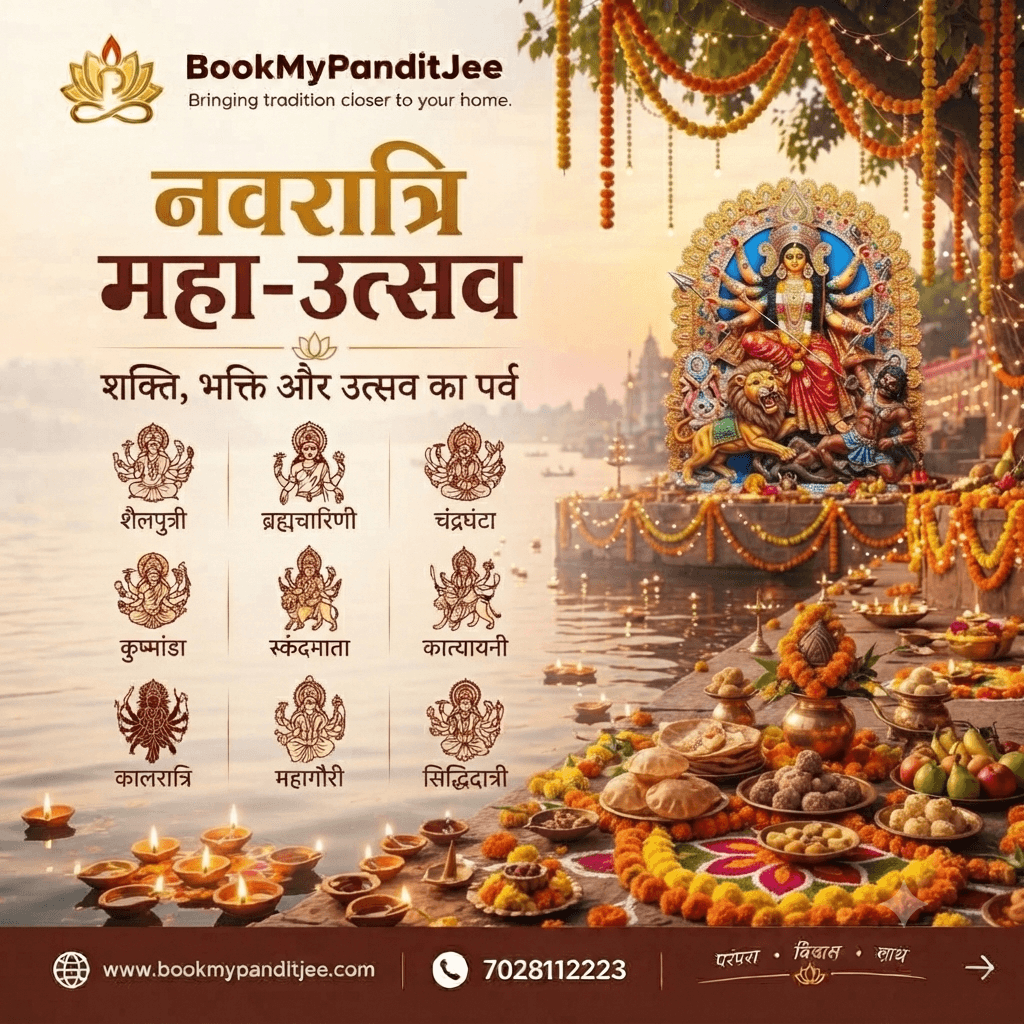
The nine forms of Maa Durga give Navratri a day-by-day structure. Families can learn one story or quality each day, involve children in prayer and decoration, and follow their own regional tradition rather than assuming every community observes the forms identically.
Day 2 — Brahmacharini
Day 2 — Brahmacharini is an important part of this festive observance. Families should follow their regional and family traditions, confirm the appropriate local timing and prepare the required samagri in advance. A knowledgeable Pandit can guide the ritual sequence where a formal ceremony is desired. The nine forms of Maa Durga give Navratri a day-by-day structure. Families can learn one story or quality each day, involve children in prayer and decoration, and follow their own regional tradition rather than assuming every community observes the forms identically.
Day 3 — Chandraghanta
Day 3 — Chandraghanta is an important part of this festive observance. Families should follow their regional and family traditions, confirm the appropriate local timing and prepare the required samagri in advance. A knowledgeable Pandit can guide the ritual sequence where a formal ceremony is desired. The nine forms of Maa Durga give Navratri a day-by-day structure. Families can learn one story or quality each day, involve children in prayer and decoration, and follow their own regional tradition rather than assuming every community observes the forms identically.
Day 4 — Kushmanda
Day 4 — Kushmanda is an important part of this festive observance. Families should follow their regional and family traditions, confirm the appropriate local timing and prepare the required samagri in advance. A knowledgeable Pandit can guide the ritual sequence where a formal ceremony is desired. The nine forms of Maa Durga give Navratri a day-by-day structure. Families can learn one story or quality each day, involve children in prayer and decoration, and follow their own regional tradition rather than assuming every community observes the forms identically.
Day 5 — Skandamata
Day 5 — Skandamata is an important part of this festive observance. Families should follow their regional and family traditions, confirm the appropriate local timing and prepare the required samagri in advance. A knowledgeable Pandit can guide the ritual sequence where a formal ceremony is desired. The nine forms of Maa Durga give Navratri a day-by-day structure. Families can learn one story or quality each day, involve children in prayer and decoration, and follow their own regional tradition rather than assuming every community observes the forms identically.
Day 6 — Katyayani
Day 6 — Katyayani is an important part of this festive observance. Families should follow their regional and family traditions, confirm the appropriate local timing and prepare the required samagri in advance. A knowledgeable Pandit can guide the ritual sequence where a formal ceremony is desired. The nine forms of Maa Durga give Navratri a day-by-day structure. Families can learn one story or quality each day, involve children in prayer and decoration, and follow their own regional tradition rather than assuming every community observes the forms identically.
Day 7 — Kalaratri
Day 7 — Kalaratri is an important part of this festive observance. Families should follow their regional and family traditions, confirm the appropriate local timing and prepare the required samagri in advance. A knowledgeable Pandit can guide the ritual sequence where a formal ceremony is desired. The nine forms of Maa Durga give Navratri a day-by-day structure. Families can learn one story or quality each day, involve children in prayer and decoration, and follow their own regional tradition rather than assuming every community observes the forms identically.
Day 8 — Mahagauri
Day 8 — Mahagauri is an important part of this festive observance. Families should follow their regional and family traditions, confirm the appropriate local timing and prepare the required samagri in advance. A knowledgeable Pandit can guide the ritual sequence where a formal ceremony is desired. The nine forms of Maa Durga give Navratri a day-by-day structure. Families can learn one story or quality each day, involve children in prayer and decoration, and follow their own regional tradition rather than assuming every community observes the forms identically.
Day 9 — Siddhidatri
Day 9 — Siddhidatri is an important part of this festive observance. Families should follow their regional and family traditions, confirm the appropriate local timing and prepare the required samagri in advance. A knowledgeable Pandit can guide the ritual sequence where a formal ceremony is desired. The nine forms of Maa Durga give Navratri a day-by-day structure. Families can learn one story or quality each day, involve children in prayer and decoration, and follow their own regional tradition rather than assuming every community observes the forms identically.
Family Learning
Family Learning is an important part of this festive observance. Families should follow their regional and family traditions, confirm the appropriate local timing and prepare the required samagri in advance. A knowledgeable Pandit can guide the ritual sequence where a formal ceremony is desired. The nine forms of Maa Durga give Navratri a day-by-day structure. Families can learn one story or quality each day, involve children in prayer and decoration, and follow their own regional tradition rather than assuming every community observes the forms identically.
Expert Tips
-
Confirm local Muhurat before the ceremony.
-
Prepare samagri in advance.
-
Discuss regional customs with the Pandit.
-
Keep the puja space clean and organized.
-
Book early during festive season.
Frequently Asked Questions
What is the festival about?
It is a traditional Hindu observance with regional and family-specific practices.
Can it be celebrated at home?
Yes, families can observe appropriate rituals at home according to tradition.
Should the date and timing be confirmed locally?
Yes. Festival calendars and Muhurat can vary by location and tradition.
Can a Pandit guide the ceremony?
Yes. A Pandit can guide formal rituals and explain the sequence.
How early should a festive Pandit be booked?
Advance booking is recommended during high-demand festive periods.
Conclusion
Family Learning is an important part of this festive observance. Families should follow their regional and family traditions, confirm the appropriate local timing and prepare the required samagri in advance. A knowledgeable Pandit can guide the ritual sequence where a formal ceremony is desired. The nine forms of Maa Durga give Navratri a day-by-day structure. Families can learn one story or quality each day, involve children in prayer and decoration, and follow their own regional tradition rather than assuming every community observes the forms identically.
Call to Action
BookMyPanditjee helps devotees connect with verified and experienced Pandits for religious ceremonies. Families can explore the required service, choose a suitable date and time, review booking details and arrange their ceremony conveniently. Visit BookMyPanditjee.com to begin planning your festive puja.